Best Sofa Styles Explained: A Buyer's Guide for Australian Homes
Confused by sofa styles? This plain-English guide explains every major sofa type, the right size and fabric for your space, and how to buy a couch that lasts.
A sofa is one of the biggest furniture investments you’ll make — and one of the hardest to get right. Buy well and it anchors your living room for a decade. Buy badly and you’re stuck with something too big, too firm, or falling apart in two years. This guide cuts through the jargon so you can choose with confidence.
First, the styles — explained simply
Sofa “style” really comes down to shape and silhouette. Here are the ones worth knowing.
Standard 2- and 3-seater
The classic upright couch. Versatile, fits most rooms, and the safest first sofa. If you’re unsure what you want, a clean-lined 3-seater in a neutral fabric is almost impossible to get wrong — and it pairs beautifully with the ideas in our living room guides.
Sectional / modular
An L- or U-shaped sofa made of joinable pieces. Brilliant for families and open-plan living because it seats a lot of people and defines a zone. The catch: sectionals are large. Measure ruthlessly (more on that below) before committing.
Chesterfield
Low arms the same height as the back, deep button tufting, often in leather. A statement, traditional look. Stunning in the right room, but the upright back is less loungy than modern shapes.
Mid-century / track arm
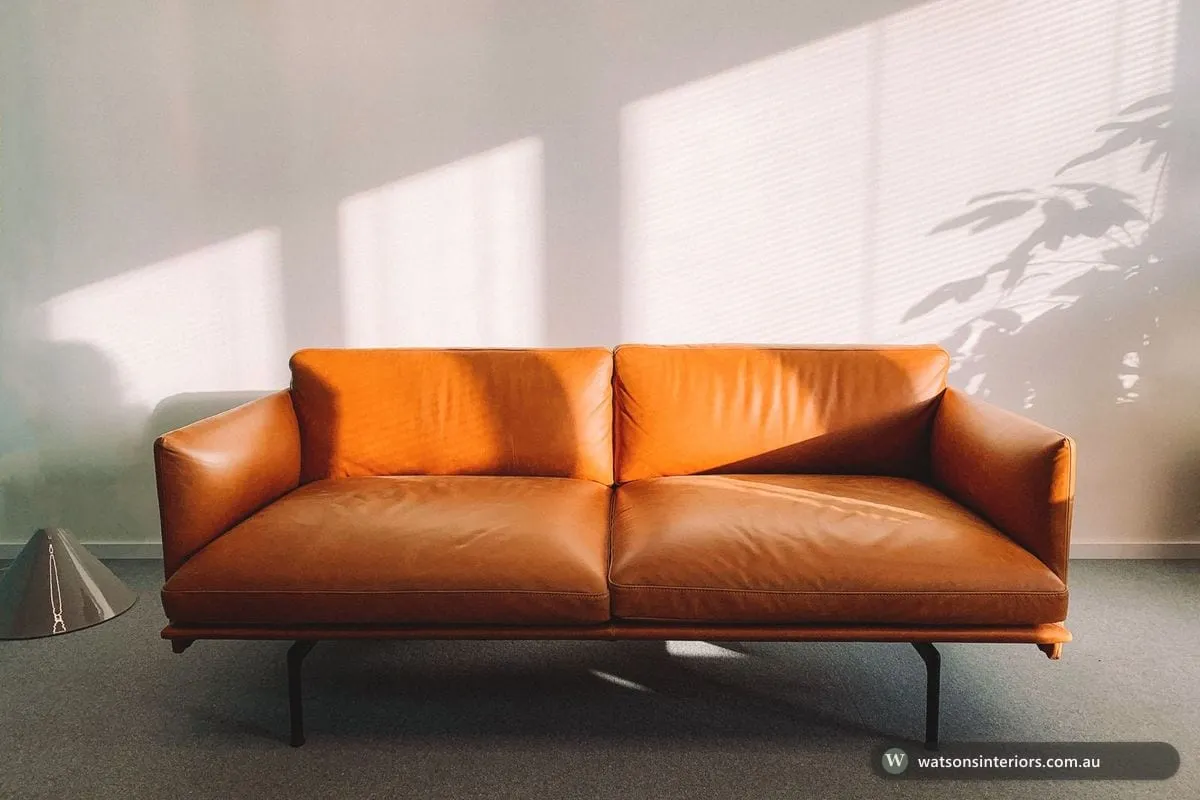
Slim, low, tapered wooden or metal legs and tight cushions — like the tan leather two-seater above. This is the look behind most “modern” and Scandinavian interiors. It feels light in a room, which makes it a great pick for smaller spaces (see our small living room ideas).
Lawson / pillow-back
Soft, deep, casual, with loose back cushions you can plump and rearrange. The most “sink-in-and-relax” style. Wonderful for comfort; just know loose cushions need regular fluffing to stay looking sharp.
Sofa bed
A sofa that converts to a bed. Worth it if you host guests and lack a spare room. Prioritise the mattress quality and a smooth, easy mechanism — cheap ones are uncomfortable as both.
Get the size right (where most people go wrong)
A sofa that doesn’t fit ruins everything. Before you fall in love with anything:
- Measure the wall or zone the sofa will sit in. Leave breathing room — don’t fill the whole wall.
- Measure your doorways, hallways, lifts and stairwells. A sofa that won’t physically get into the room is the classic, heartbreaking mistake. Note the diagonal depth too.
- Check seat depth. Deep seats (60cm+) are loungy but tough for shorter people to sit back in comfortably. Shallower seats suit upright sitting and smaller frames.
- Mind the height. Low-back modern sofas feel airy but offer less head and neck support than a high-back design.
Tip: mark out the sofa’s footprint on the floor with masking tape and live with it for a day. You’ll instantly feel whether it’s the right size for the room and walkways.
Choosing the right fabric
Fabric decides how your sofa looks, feels and survives daily life. Match it to your household.
| Material | Best for | Watch out for |
|---|---|---|
| Linen / cotton | A relaxed, natural look | Wrinkles and stains more easily |
| Performance / polyester weave | Families, pets, spills | Cheaper weaves can pill over time |
| Leather | Durability, easy wipe-clean | Higher price; can feel cold/hot with weather |
| Velvet | A luxe, rich statement | Shows marks; needs gentle care |
| Bouclé | On-trend texture | Can snag — not ideal with cats |
For Australian homes with kids, pets or lots of sun, a performance fabric or good leather usually wins on longevity. If you want the trend-led textures, save them for a low-traffic formal lounge.
A quick durability number to ask the retailer: the Martindale rub count. Aim for 20,000+ for family use, 10,000–15,000 for lighter use.
How to judge quality (without being an expert)
You can spot a well-made sofa with a few simple checks:
- The frame. Kiln-dried hardwood lasts; particleboard and softwood don’t. Lift one corner — a quality sofa feels solid and doesn’t twist or creak.
- The suspension. “Eight-way hand-tied” springs are the gold standard; sinuous (serpentine) springs are a fine mid-range option. Avoid sofas that feel like you’re sitting on the frame.
- The cushions. High-density foam (look for 1.8kg/35+ density) holds shape far longer than cheap foam, which sags within a year. Feather-wrapped foam adds comfort but needs plumping.
- The finish. Even, tight stitching and patterns that line up at the seams signal care. Wonky seams hint at corners cut elsewhere.
Match the sofa to your room
- Small living room? Go for a slim mid-century or track-arm style with exposed legs — seeing the floor underneath keeps the room feeling open. Pair it with the layout tips in our small living room guide.
- Family / open-plan? A sectional in a performance fabric earns its space.
- Rental or likely to move? Choose a lighter, modular design that’s easy to shift and fits through standard doorways.
- Statement formal lounge? A Chesterfield or velvet Lawson can be the hero piece.
Where Australians buy sofas
You’ll find solid options across a range of budgets at retailers like Koala, Castlery, Temple & Webster, Freedom, Fantastic Furniture and IKEA, plus local upholsterers for custom work. Always check the delivery lead time (some quality sofas are made to order and take 8–12 weeks) and the trial/return policy before you pay.
A simple buying checklist
Before you click “buy”, confirm:
- ✅ It physically fits the room and the path to get it inside.
- ✅ The fabric suits your household (kids, pets, sun).
- ✅ The frame is hardwood and the cushions are high-density.
- ✅ Seat depth and back height suit how you actually sit.
- ✅ You’ve checked warranty, lead time and returns.
Get those five right and you’ll have a sofa that looks great, feels great, and still does both in ten years. For more help furnishing the rest of your space, browse all our furniture guides.
Next up: pair your new sofa with our living room ideas and Australian home trends.