Small Living Room Ideas on a Budget (That Actually Work)
21 practical small living room ideas to make a compact space feel bigger, brighter and more stylish — without spending a fortune. Real tips for Australian homes.
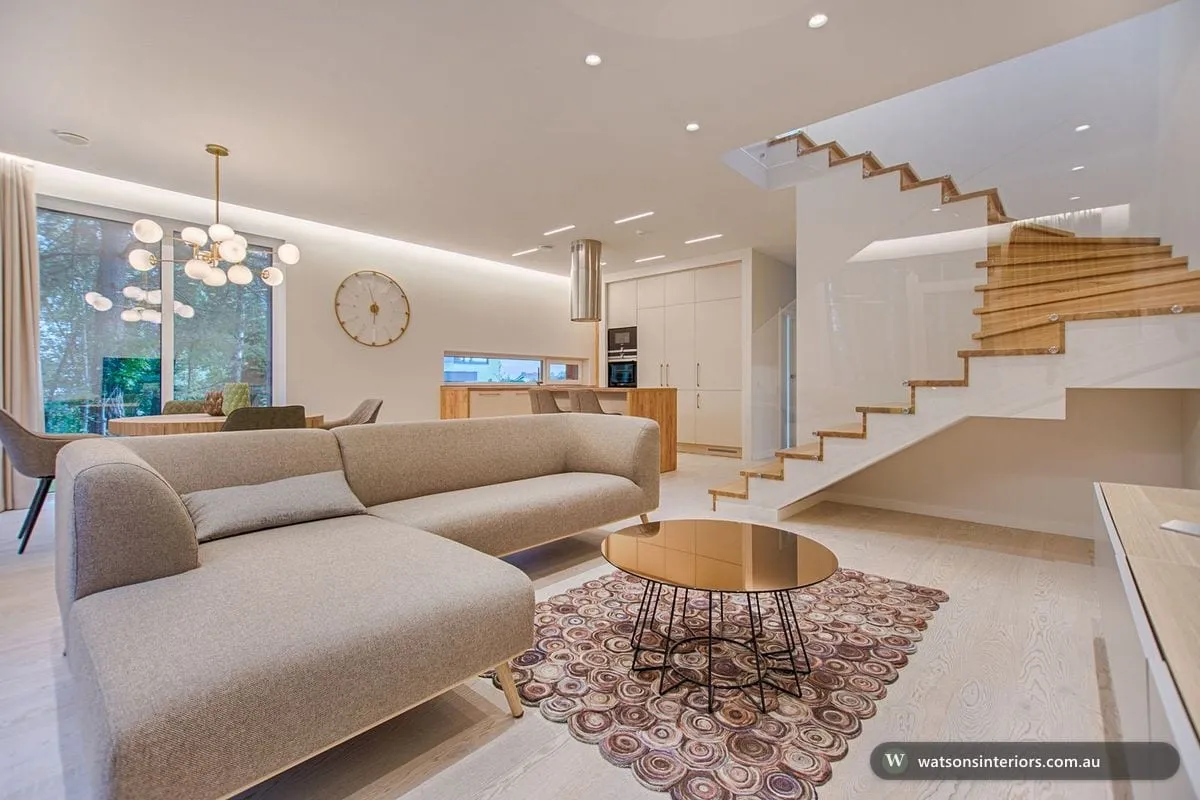
A small living room is not a design problem — it’s a design opportunity. Some of the most beautiful, liveable rooms we feature are compact spaces where every decision had to earn its place. The trick isn’t more stuff or more money; it’s making smart, intentional choices about light, scale and layout.
Below are 21 small living room ideas you can use on almost any budget, from completely free rearranging to small purchases that punch well above their price.
Start with the layout (it’s free)
Before you buy anything, move what you already own. Layout is the single biggest factor in how large a room feels, and it costs nothing to experiment.
- Float the sofa off the wall — or push it right against one. In a small room, pushing your largest piece flat against the longest wall usually frees up the most usable floor. Try it both ways and see which opens the walkway.
- Create one clear walkway. Aim for at least 60–70cm of unobstructed path through the room. A clear route instantly reads as “spacious.”
- Angle nothing. Diagonal furniture wastes corners in small rooms. Keep pieces square to the walls.
- Pull seating closer together. Counterintuitively, a tight, cosy conversation group makes the rest of the room feel open.
For a deeper walkthrough, see our guide to living room layout tips.
Use light to expand the space
Light — both natural and artificial — does more for a small room than any single purchase.
- Maximise natural light. Swap heavy curtains for sheer panels or a simple blind. Keep the area around windows clear.
- Hang curtains high and wide. Mount the rod close to the ceiling and extend it past the window frame. The eye reads the window as larger, and the ceiling as taller.
- Add a large mirror opposite a window. This is the oldest trick in the book because it works — it effectively doubles the daylight and the sense of depth.
- Layer your lighting. Instead of one harsh ceiling light, use two or three smaller sources: a floor lamp, a table lamp, maybe some warm LED strip behind a shelf. Pools of soft light make a room feel larger and more inviting at night.
Choose colours that open up the room
- Go light on the big surfaces. Walls, sofa and rug in soft, warm neutrals (think off-white, oatmeal, warm grey) reflect light and recede visually.
- Use one accent colour, repeated. Pick a single accent — a soft sage, terracotta or denim blue — and repeat it in three places (a cushion, a throw, a piece of art). Repetition reads as “designed,” not cluttered.
- Paint trim and walls the same colour. When skirting boards and walls match, there’s no visual line to chop the room into pieces, so it feels continuous and bigger.
- Keep the floor tone consistent. A single rug that fits the seating area (with at least the front legs of the sofa on it) grounds the space without breaking it up.
Pick furniture that works harder
In a small living room, every piece should ideally do two jobs.
- Choose a sofa with exposed legs. Seeing the floor under the sofa makes the room feel airier than a piece that sits flush to the ground. Our furniture buying guides cover how to pick the right sofa scale for a small room.
- Use a storage ottoman or coffee table with a shelf. Hidden storage for blankets, remotes and clutter keeps surfaces clear — and clear surfaces are what make a room feel calm and spacious.
- Go for a slim console instead of a bulky TV unit. A wall-mounted TV above a narrow console frees up floor and visual space.
- Nesting tables beat one big coffee table. Pull them apart when you need them, tuck them away when you don’t.
- Try a round coffee table. No sharp corners means easier flow through a tight space, and a softer visual footprint.
Rule of thumb: in a small room, fewer, slightly larger pieces look better than lots of small ones. A scatter of tiny furniture reads as clutter; two or three well-chosen pieces read as intentional.
Draw the eye up and out
- Use vertical storage. Tall, narrow shelving draws the eye upward and uses the wall space most people ignore. Floating shelves are a great DIY project — see our DIY decor ideas for simple builds.
- Hang art in a vertical stack. Two or three frames stacked vertically emphasise height.
- Leave some wall empty. Negative space isn’t wasted space. A little breathing room around your art and shelves stops the room feeling busy.
The finishing touch
- Add one or two plants — not ten. A single larger plant (or one trailing plant on a shelf) brings life and a sense of calm. Overcrowding with greenery has the opposite effect in a small room.
Putting it together on a budget
You don’t need to do all 21 at once. If you’re starting from scratch, we’d prioritise in this order:
- Free, this weekend: rearrange the layout, declutter surfaces, raise the curtains.
- Under $100: a large mirror, two soft lamps, a few cushions in your accent colour.
- Under $300: a storage ottoman, a single well-sized rug, a couple of floating shelves.
Each step compounds. A decluttered, well-lit, well-arranged room looks expensive even when almost nothing in it was.
Small spaces reward restraint. Choose less, choose light, and let the room breathe — and your compact living room will feel far bigger than its floor plan suggests.
Looking for more? Browse all our living room ideas, or explore home organisation tips to keep your small space clutter-free.